Expressvpn Glossary
Split DNS

What is split DNS?
Split DNS is a configuration in which a Domain Name System (DNS) server returns different responses for the same domain name based on the source of the query. In other words, one domain can resolve to different IP addresses for internal and external users.
This configuration is commonly used in enterprise networks, supporting direct access to internal servers and resources.
How does split DNS work?
A split DNS system evaluates the source of each query and returns the appropriate DNS record. Internal queries resolve to internal DNS records, while external queries resolve to public records. It’s often used with VPNs so remote users can resolve internal domains through the organization’s DNS servers.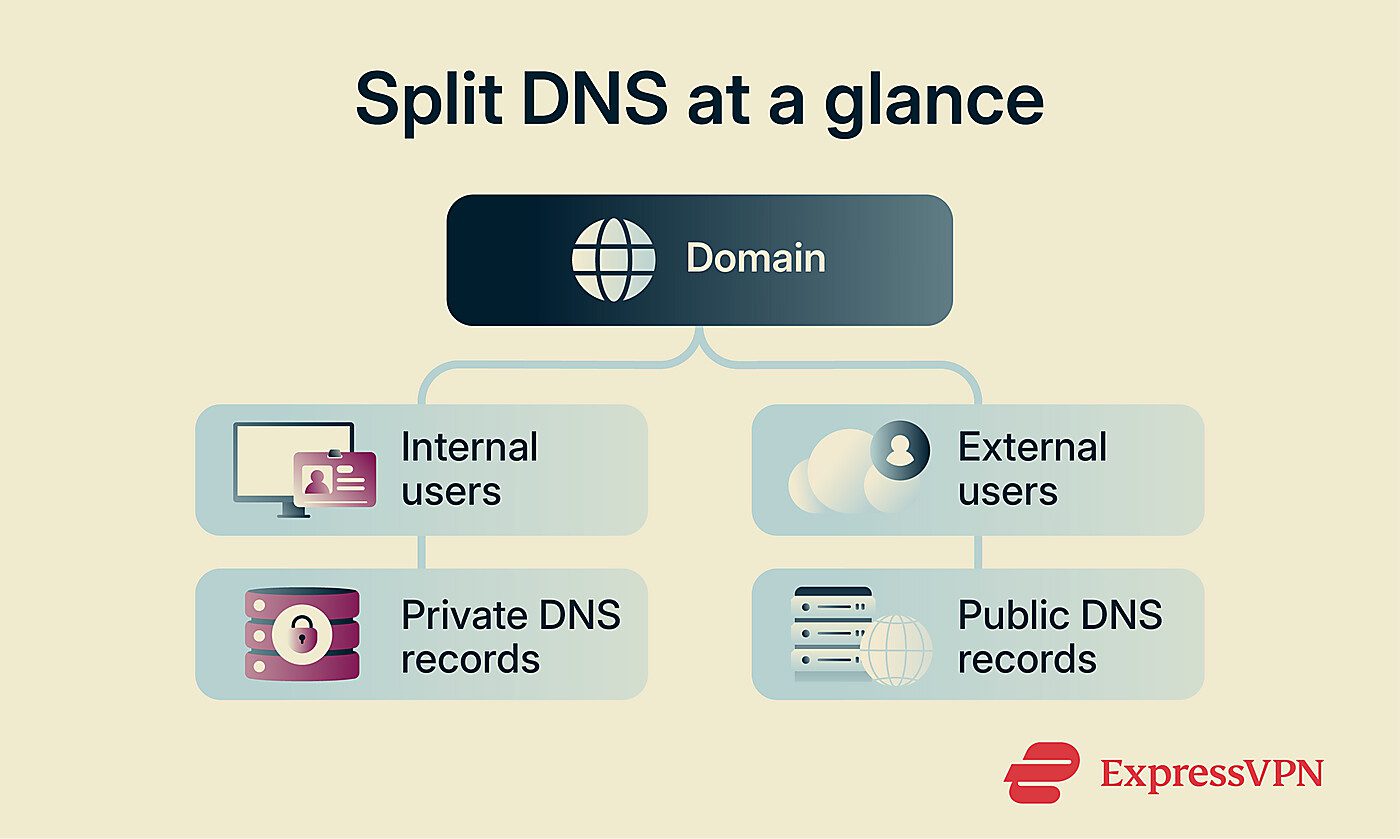
Where is it used?
Split DNS is most commonly used in the following scenarios:
- Corporate networks and intranets: Provide internal access to company services while keeping external access separate.
- Remote access virtual private network (VPN) environments: Extend internal DNS resolution to remote users connected through a VPN.
- Hybrid cloud deployments: Route users to different service endpoints depending on whether they’re inside or outside the network.
Why is split DNS important?
Split DNS helps:
- Limit exposure of internal systems by restricting internal records to authorized queries.
- Improve access to internal services by avoiding unnecessary routing.
- Support consistent domain resolution across internal and remote environments.
Limitations of split DNS
Split DNS can be complex to configure, and misconfiguration may cause resolution errors or unintended exposure of internal records. Troubleshooting can also be more difficult due to differing internal and external responses.
Further reading
- Split tunneling vs. full tunneling: Which should you use?
- What is DNS, and how does it work?
- What is my DNS? How to check and find your DNS server
- How to change DNS settings on any device