Expressvpn Glossary
What is DNS round robin?
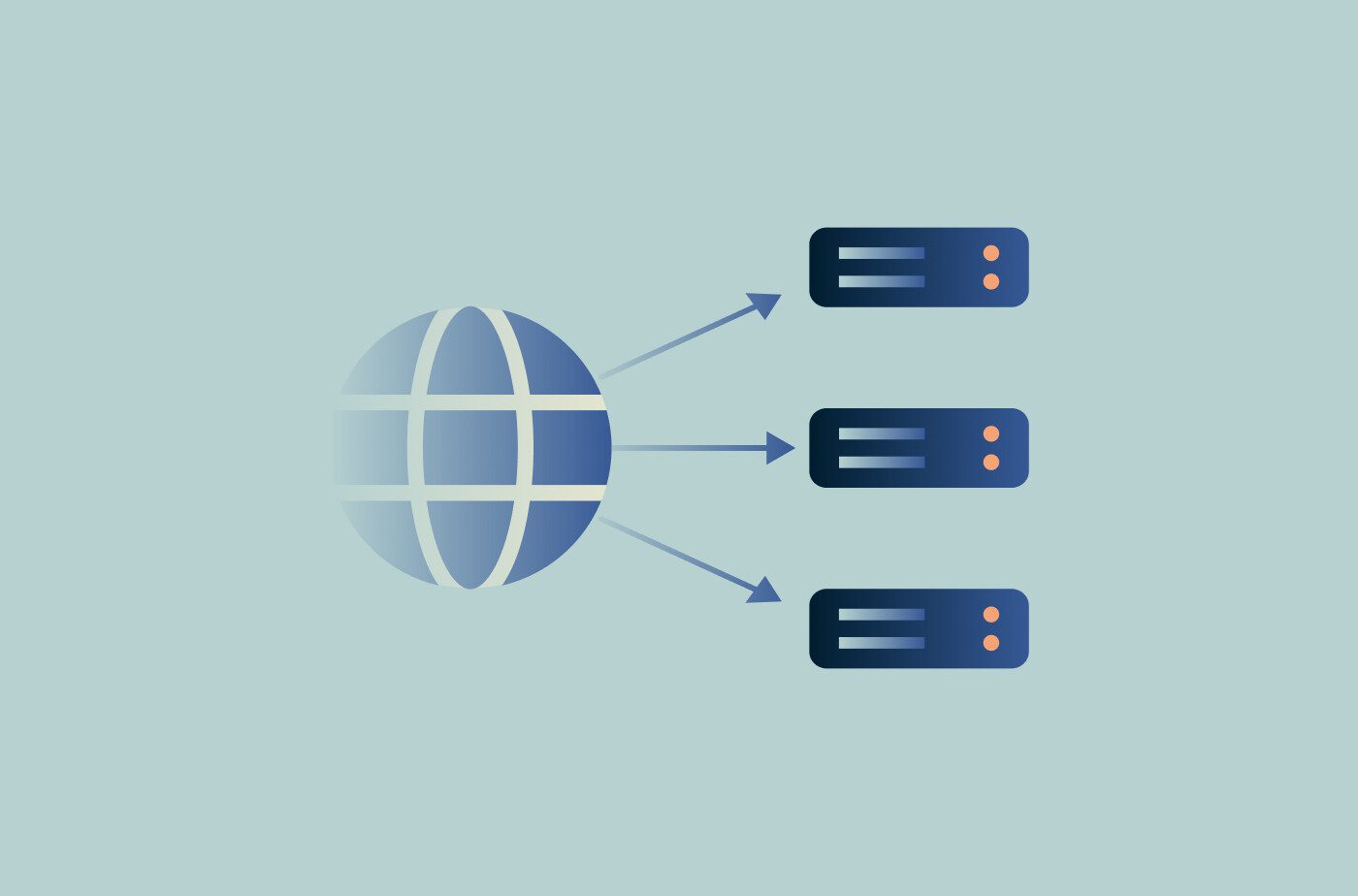
DNS round robin is a traffic distribution method that assigns multiple IP addresses to a single domain name and rotates those addresses for DNS requests. It’s designed to spread traffic across different servers, which can help reduce reliance on a single server.
How does DNS round robin work?
A network administrator creates multiple DNS records for the same domain, each pointing to a different server IP address. When a DNS server responds to a request for that domain, it returns all the addresses but shifts their order with each response.
For example, a domain with three servers might return its addresses in this order:
- First lookup: 192.0.2.1, 192.0.2.2, 192.0.2.3
- Second lookup: 192.0.2.2, 192.0.2.3, 192.0.2.1
- Third lookup: 192.0.2.3, 192.0.2.1, 192.0.2.2
Devices may connect to whichever IP address appears first, so rotating the order is intended to balance requests across all available servers.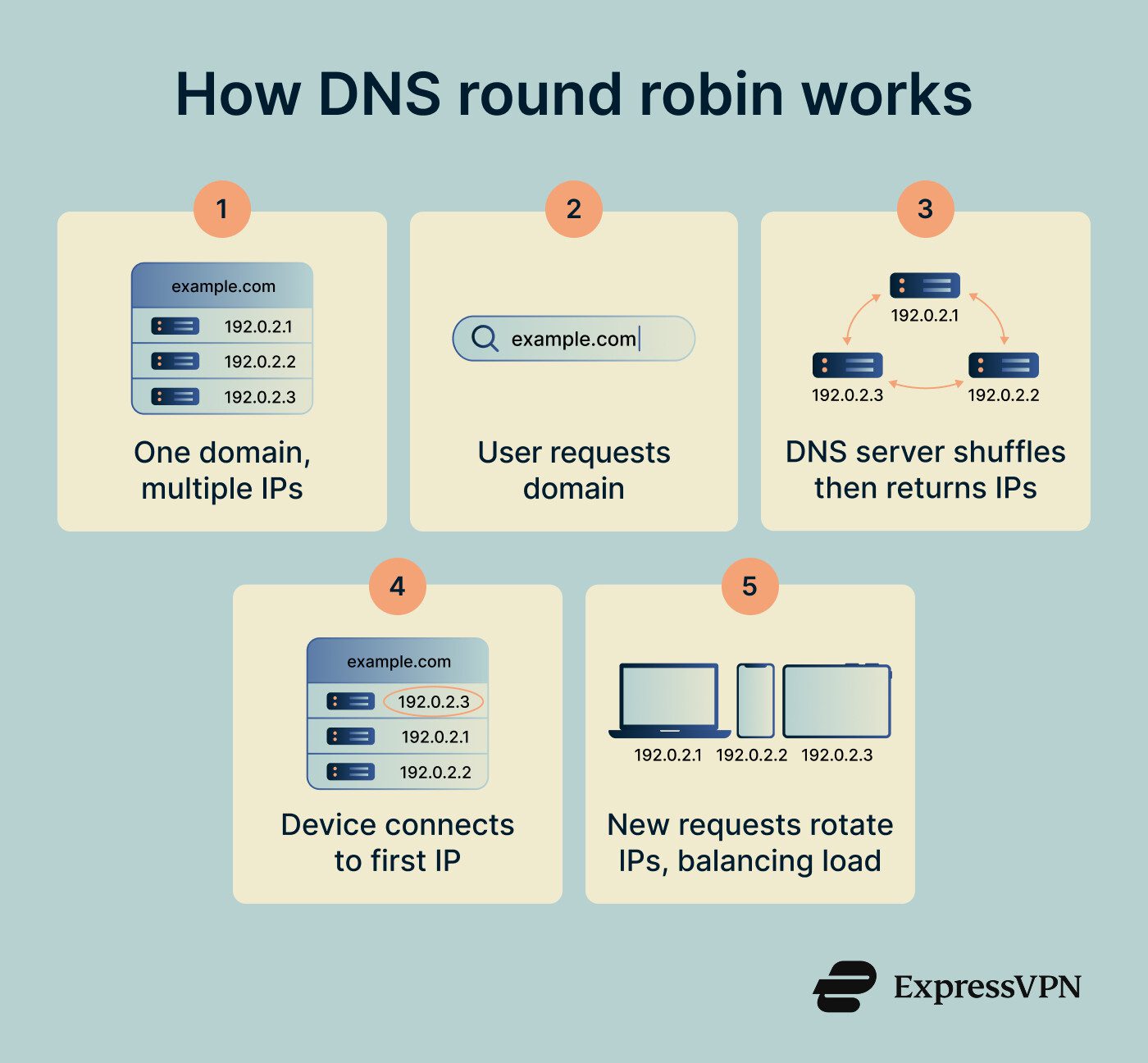
Why is DNS round robin important?
DNS round robin provides a simple form of load balancing, directing traffic to multiple servers instead of overwhelming one. Because it’s set up using standard DNS configuration, it doesn't require additional hardware or specialized software.
It also adds basic redundancy. If one server becomes unavailable, other servers in the rotation can still receive requests. This doesn't guarantee that traffic will automatically avoid the failed server, but it can reduce reliance on a single system.
Downsides of DNS round robin
- Not true load balancing: DNS round robin doesn't consider server health, response time, or current load. Systems that need traffic directed based on real-time conditions require a dedicated load balancer.
- Caching can skew distribution: Recursive resolvers cache DNS records, meaning they’ll serve the same IP address order until the DNS record’s time to live (TTL) expires. This can funnel a disproportionate share of traffic to one server.
- Limited session persistence: Consecutive lookups for the same domain can return different address orders. Applications that depend on a user returning to the same server, such as those storing login sessions locally, may not work reliably with DNS round robin.
- Client-side behavior varies: Not all devices connect to the first address in the list. Some operating systems reorder addresses based on how closely a server's IP matches the device's own network range. This can override the intended rotation and concentrate traffic on specific servers.
- Fast flux abuse: Fast flux is a method used to prevent malicious domains from being identified by their IP addresses. Although DNS round robin is commonly used for legitimate traffic distribution, attackers may abuse these techniques to achieve fast flux.
Further reading
- What is DNS and how does it work?
- Types of DNS servers
- What is managed DNS?
- A complete guide to nameservers
- What is WWW2?